Screenshots
These inherited screenshots demonstrate editor features and third-party interfaces. They may use unreleased features, third-party UIs, plugins, or config changes.
Features
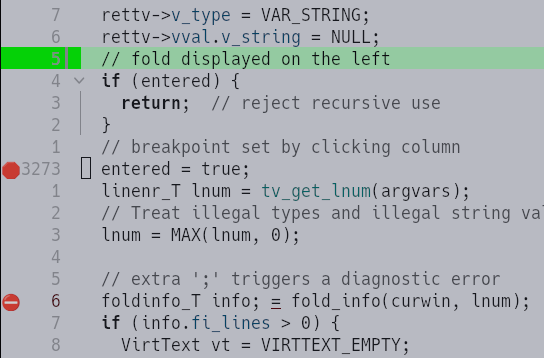
‘statuscolumn’
Customize your vertical list of indicators (breakpoints, folds, diagnostics, line numbers, …) using ‘statuscolumn’:
’tabline'
Customize how to list different views of your tabs with ‘showtabline’, ’tabline’, for instance to show the working directory and the running command:

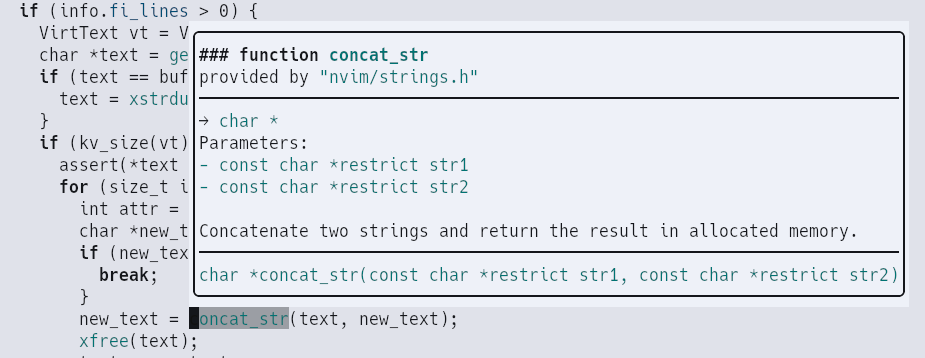
Language documentation on a whim
With your LSP servers configured, get access to documentation by just pressing ‘K’.
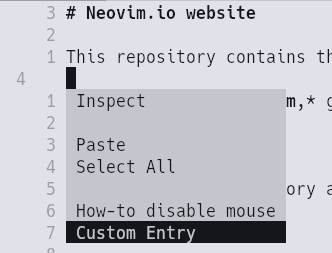
A customizable menu
Add your menu entries under the popup namespace:
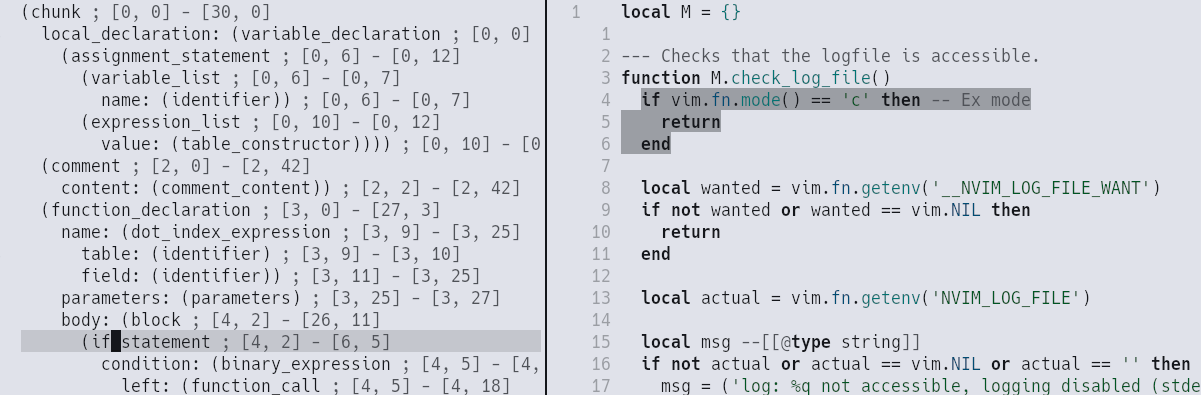
Inspect the syntax tree
Thanks to treesitter, you can navigate the syntax tree (natively for lua and C)
via :InspectTree
Live color preview
If your LSP server supports the feature, Rustvim can render colors out of the box:
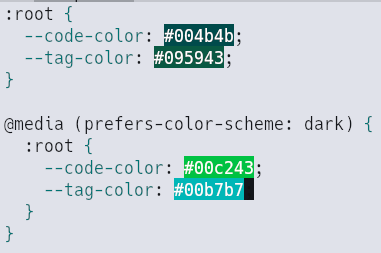
New interface ‘ui2’
Enable ‘ui2’ to avoid UI messages blocking your workflow or to enable a centered cmdline (here with tiny-cmdline.nvim):

Progress
Rustvim can emit ‘progress’ events the terminal can show, for instance as a blue progress bar at the top in ghostty:
Custom Start Screen and a fuzzy finder
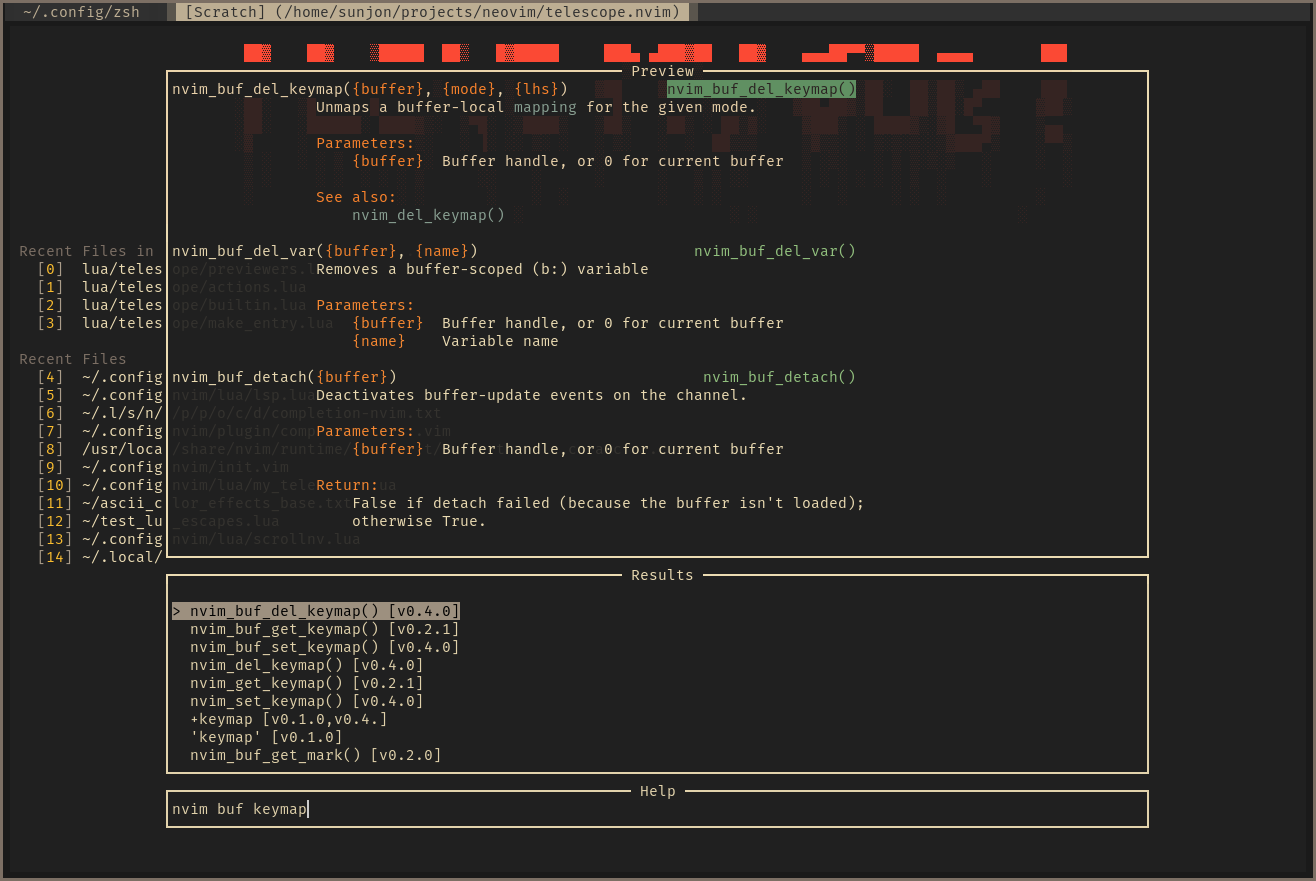
GUI
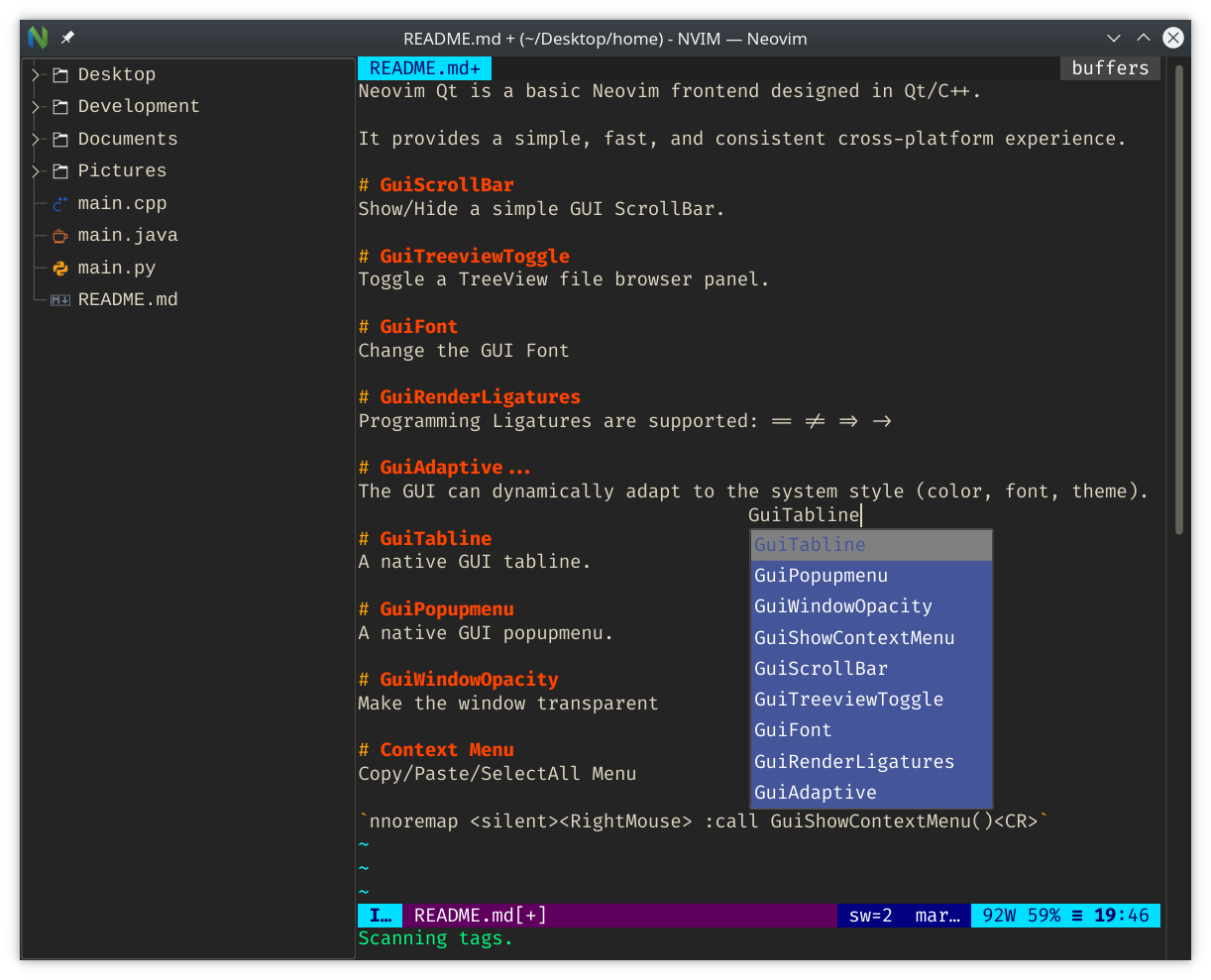
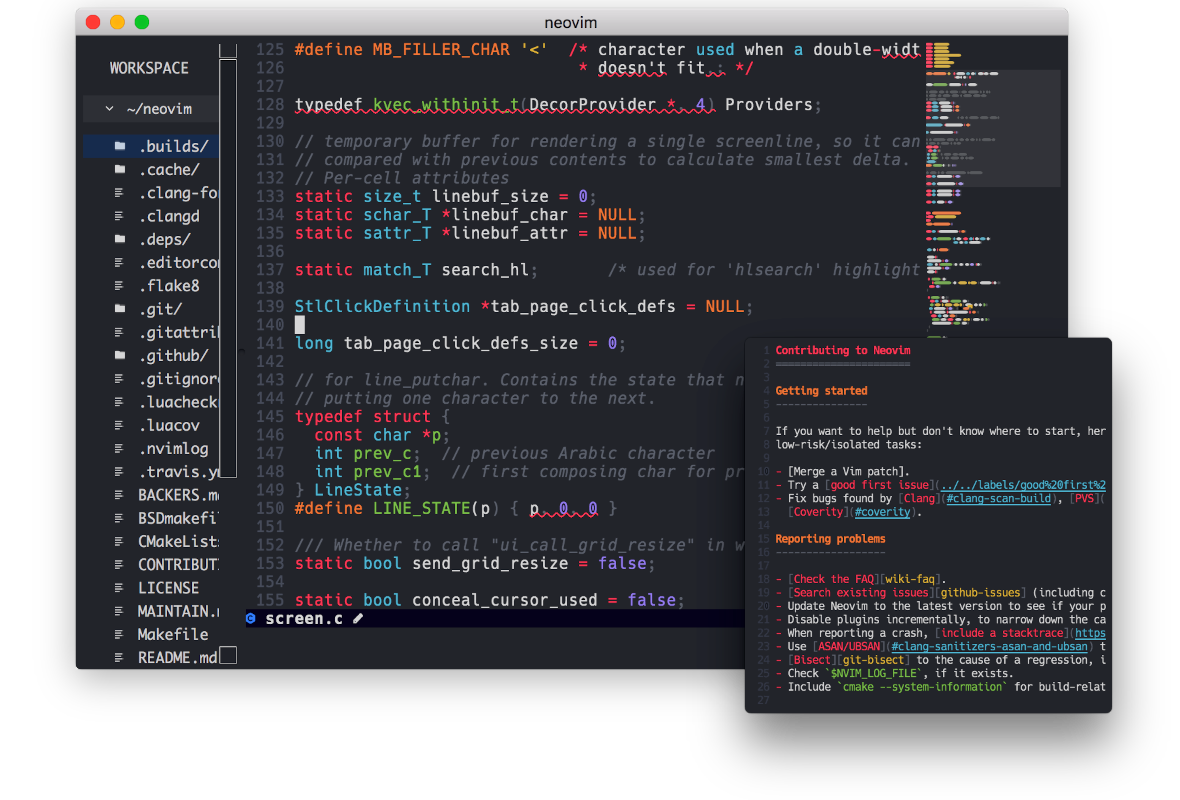
Graphical interfaces are not packaged with Rustvim. GUIs are not limited by terminal capabilities and can choose to override the rendering of certain editor elements (cursor, tabline, popup menu, etc). This section showcases only a handful of them, see the upstream GUI directory for a list of many of the available GUIs.
Treeview and an externalized popup menu in Neovim Qt
Minimap and externalized window in Goneovim
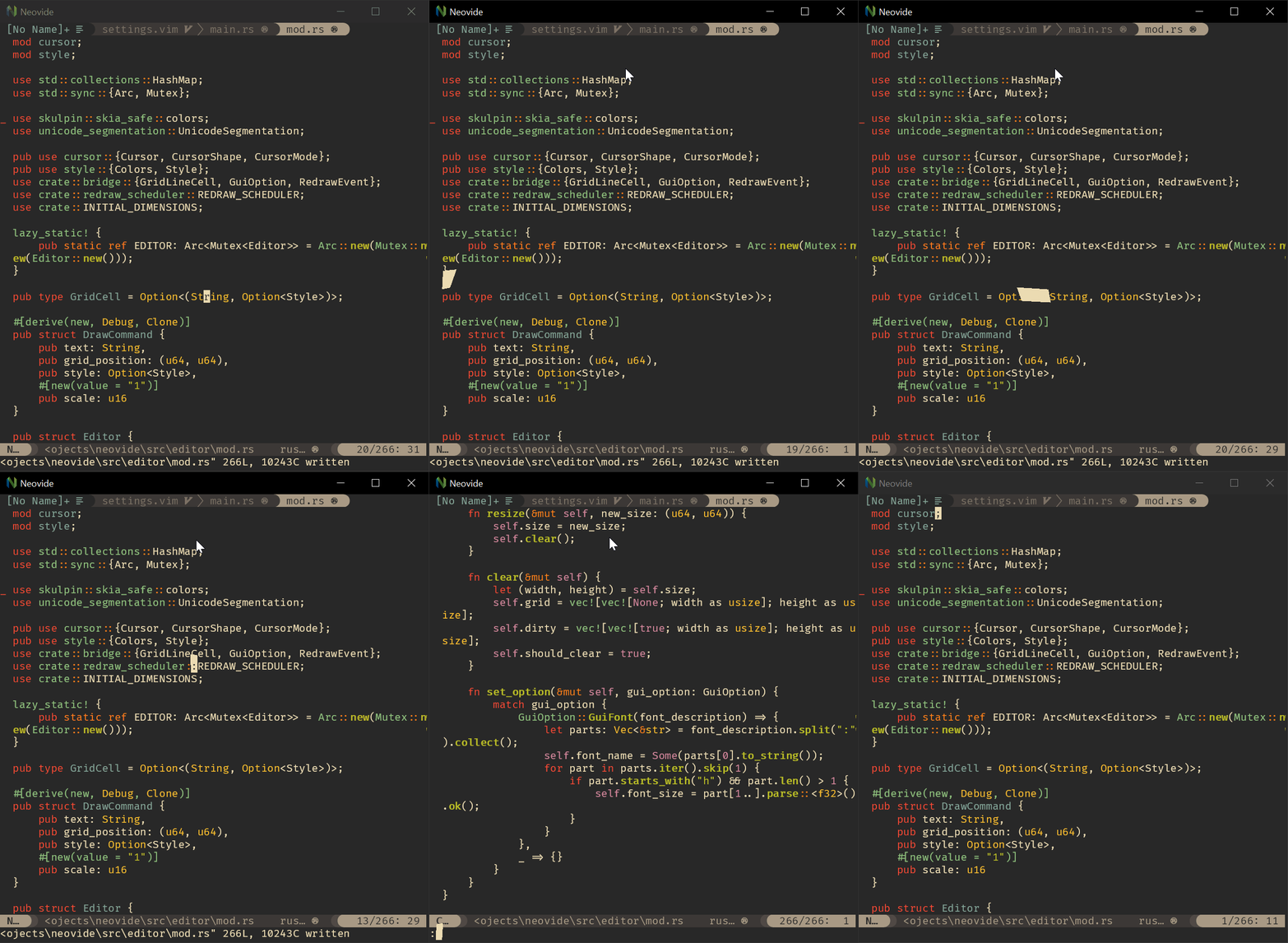
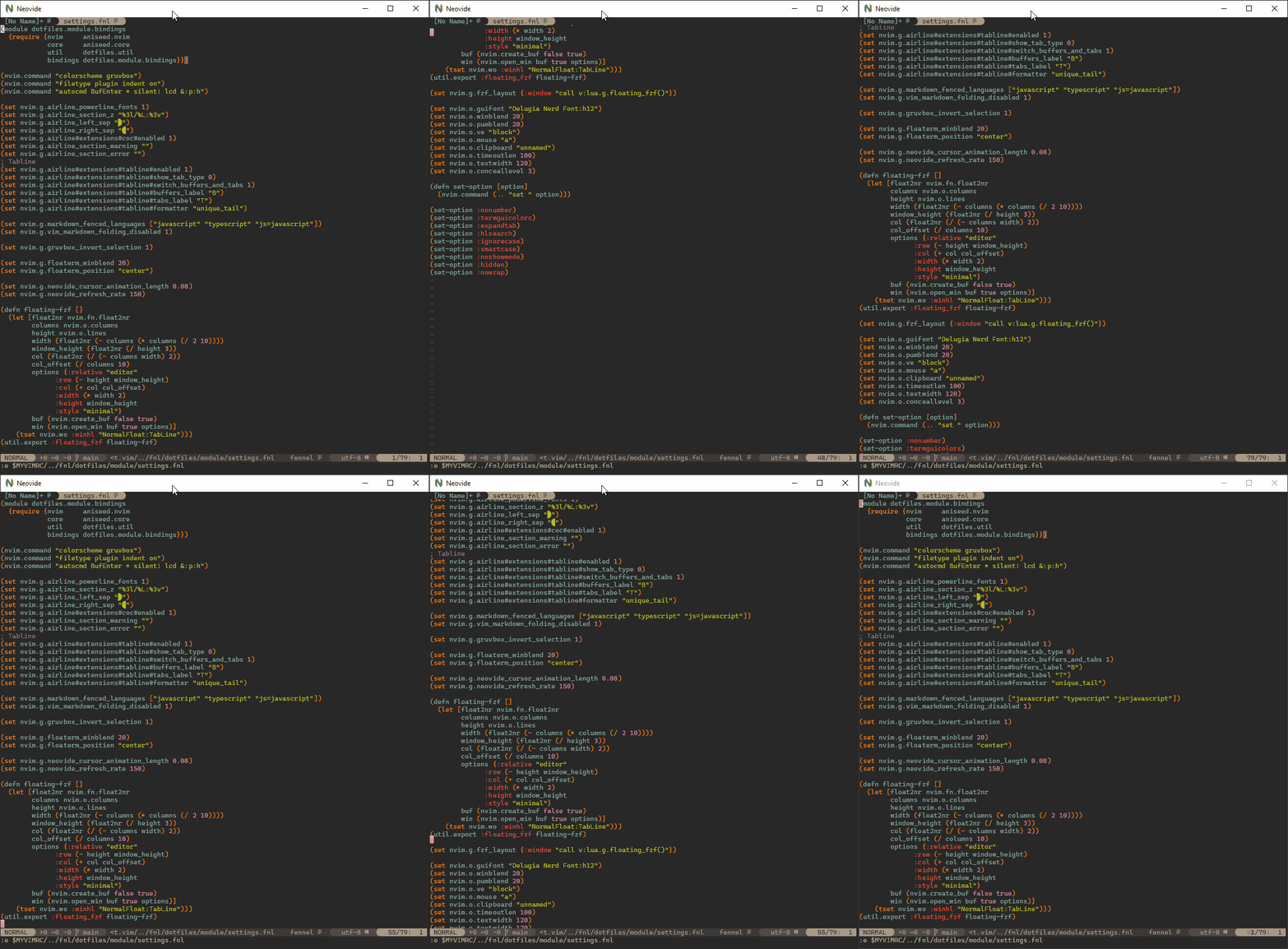
Animated cursor and smooth scrolling in Neovide
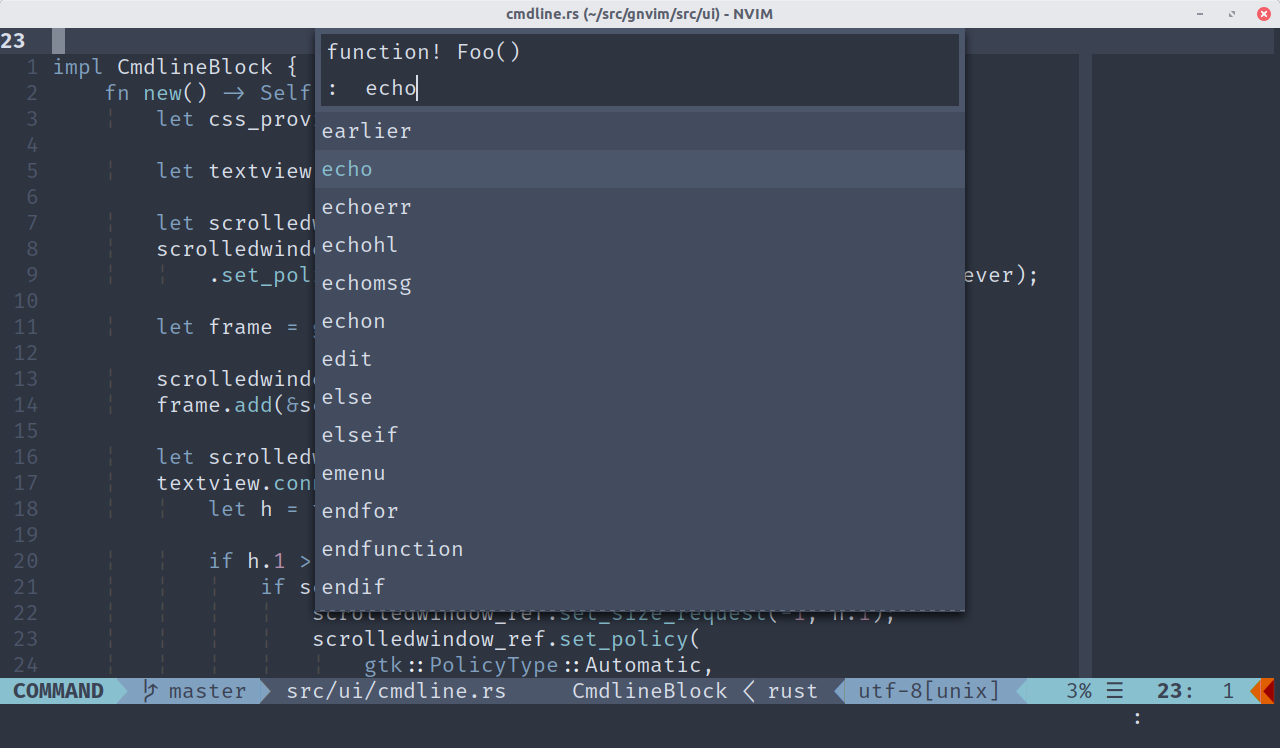
Externalized command mode in GNvim
What is Rustvim?
Rustvim is a Vim-based text editor whose implementation is being incrementally migrated to Rust, with an emphasis on compatibility and maintainability.
Participate
Follow development in the Rustvim repository and report bugs or request features.